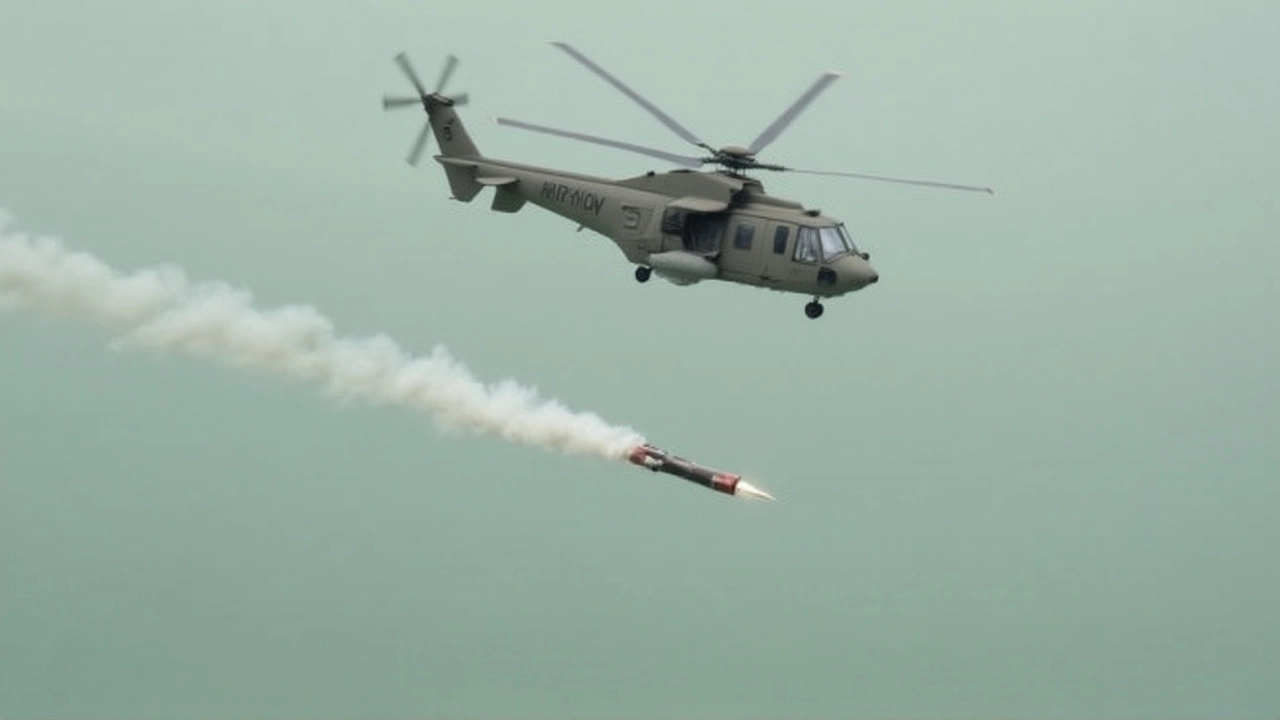
When Defence Research and Development Organisation (DRDO) and the Indian Navy fired two missiles from a single helicopter over the Bay of Bengal this past Wednesday, they didn’t just hit a target. They demonstrated a capability that changes how naval warfare is fought.
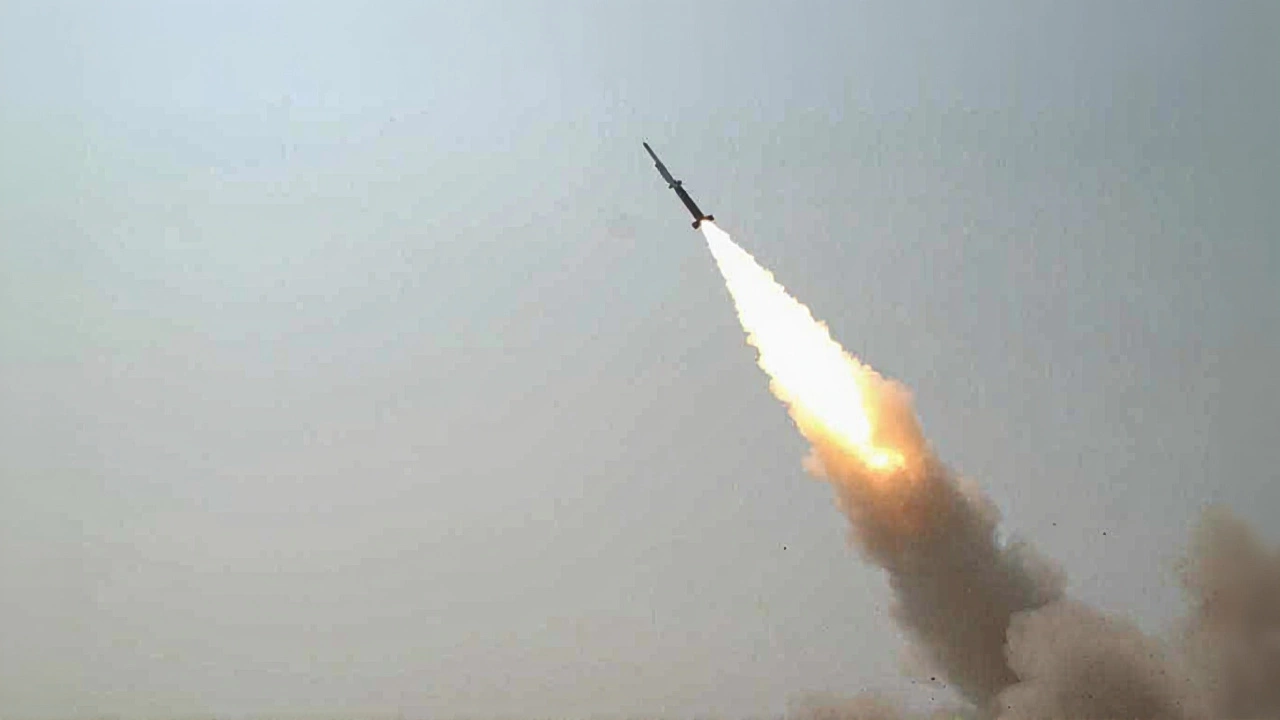
The test, conducted off the coast of Odisha, marked the first successful launch of the Naval Short Range Anti-Ship Missile (NASM-SR) from an airborne platform. But here’s the twist: it wasn’t a single shot. It was a salvo. Two missiles were launched within seconds of each other, both striking the lower hull of a target ship with pinpoint accuracy.
This isn’t just another drill. It’s a signal to potential adversaries that India can now saturate enemy defenses with rapid, low-altitude strikes from helicopters—something few nations can do at this scale.
The Salvo Launch: Overwhelming Enemy Defenses
In military terms, a “salvo launch” means firing multiple weapons in quick succession against a single target. The goal? To overload the enemy’s radar and air defense systems so quickly that they can’t react effectively. As one video narration put it, the aim is to make the adversary’s system “unable to understand what’s happening.”
During the test, the helicopter released two NASM-SR missiles within a few seconds. Both missiles flew close to the sea surface—a tactic known as “sea-skimming”—to stay below the detection range of most radars. This low-altitude flight path makes it extremely difficult for enemy ships to spot the incoming threat until it’s too late.
“When several missiles are fired at the same target nearly simultaneously, it’s called a salvo launch,” explained one source. “The purpose is to saturate the enemy’s air defense or radar system so heavily that they can’t respond.”
The precision of the strike was notable. Both missiles hit the lower section of the target ship’s hull, a critical area that can cause significant damage even without detonating large warheads. This level of accuracy suggests advanced guidance systems capable of navigating complex maritime environments.
Indigenous Technology with Global Implications
The NASM-SR is described as a fully indigenous system, developed jointly by multiple DRDO laboratories and Indian industrial partners. Its design includes sea-skimming technology, allowing it to hug the waves and evade radar detection. Additionally, the missile has mid-course update capabilities, meaning its trajectory can be adjusted in flight if needed.
“The missile has a system that allows new information to be fed to it while it’s in flight,” one report noted. “If required, its direction can be changed during flight.” This flexibility enhances its effectiveness in dynamic combat scenarios where targets may move or defenses adapt.
The development of such a sophisticated weapon system domestically underscores India’s growing self-reliance in defense manufacturing. While some reports mention that production is being carried out abroad, no specific foreign location or company has been identified. This ambiguity leaves room for speculation but doesn’t diminish the significance of the indigenous design and testing.
Tracking the Strike: Technology Behind the Test
To monitor the missile’s flight and impact, officials used a combination of radars, electro-optical systems, and telemetry equipment deployed at the Chandipur test range in Odisha. These instruments tracked the entire trajectory of each missile, from launch to impact, providing valuable data on performance and accuracy.
The use of ground-based tracking systems ensures that every aspect of the missile’s flight is recorded and analyzed. This data helps refine future designs and improve operational tactics. It also demonstrates India’s ability to conduct complex tests with domestic infrastructure, reducing reliance on foreign facilities.
“The full trajectory of each missile, from launch to the moment it hit the target ship, was monitored via these ground-based radars, electro-optical tracking systems, and telemetry sensors located at the Chandipur test range,” according to multiple sources.
Political and Strategic Reactions
Rajnath Singh, Defence Minister of India, praised the success of the test, stating that the development of the NASM-SR would significantly enhance the military’s operational capabilities. “The creation of this missile will considerably increase the strength of the armed forces,” he said.
Singh also congratulated DRDO, the Indian Air Force, and the entire team involved in the project. His comments highlight the strategic importance of the missile, not just as a weapon but as a symbol of India’s advancing defense technology.
Media commentary has gone further, suggesting that this capability places India at the forefront of modern naval warfare. One narrator claimed that challenging India after acquiring this capability is “almost impossible,” emphasizing the deterrent effect of such advanced weaponry.
Broader Context: A Pattern of Advancement
This test is part of a broader pattern of frequent missile testing by India in recent months. While exact numbers aren’t provided, the frequency suggests a concerted effort to validate and showcase new capabilities. Alongside the NASM-SR test, DRDO and the Navy recently completed hydrodynamic performance and model testing for a new warship project, indicating ongoing advancements in naval technology.
Additionally, there’s mention of a 30 mm crewless turret and a 7.62 mm PKT gun configured to launch anti-tank guided missiles. With 65 percent indigenous content already achieved and plans to raise it to 90 percent, this multi-role configuration highlights India’s push toward modular, adaptable defense systems.

What’s Next for India’s Naval Capabilities?
The successful test of the NASM-SR from a helicopter platform opens new possibilities for India’s naval strategy. Helicopters equipped with these missiles can engage enemy warships from long distances without exposing themselves to immediate danger. This stand-off attack capability adds a layer of complexity to naval engagements, forcing adversaries to rethink their defensive strategies.
As India continues to develop and integrate these technologies, the focus will likely shift to mass production and deployment. The collaboration between DRDO labs and Indian industries will play a crucial role in scaling up manufacturing while maintaining high standards of quality and reliability.
Frequently Asked Questions
What is the NASM-SR missile?
The Naval Short Range Anti-Ship Missile (NASM-SR) is an advanced, indigenous anti-ship missile developed by DRDO and Indian industries. It features sea-skimming technology to evade radar detection and can receive mid-course updates to adjust its trajectory in flight.
Why is the salvo launch capability significant?
A salvo launch involves firing multiple missiles in quick succession to overwhelm an enemy’s air defense or radar systems. This capability makes it extremely difficult for adversaries to react effectively, enhancing the survivability and effectiveness of the attacking force.
Where did the test take place?
The test was conducted over the Bay of Bengal off the coast of Odisha, with tracking support from the Chandipur test range. Radars, electro-optical systems, and telemetry equipment monitored the missile’s flight and impact.
How does this affect India’s naval strategy?
The ability to launch anti-ship missiles from helicopters allows India to engage enemy warships from long distances without exposing aircraft to immediate danger. This stand-off capability adds complexity to naval engagements and strengthens India’s deterrent posture.
Who led the development of the NASM-SR?
The missile was developed jointly by multiple DRDO laboratories and Indian industrial partners. Defence Minister Rajnath Singh praised the team, noting that the missile would significantly enhance the military’s operational capabilities.
Are there other related developments in India’s defense sector?
Yes, alongside the NASM-SR test, DRDO and the Navy recently completed hydrodynamic and model testing for a new warship project. Additionally, a 30 mm crewless turret with a 7.62 mm PKT gun has been configured to launch anti-tank guided missiles, with plans to increase indigenous content from 65 percent to 90 percent.